
Reading time: 7 minutes
Published: August 22, 2026
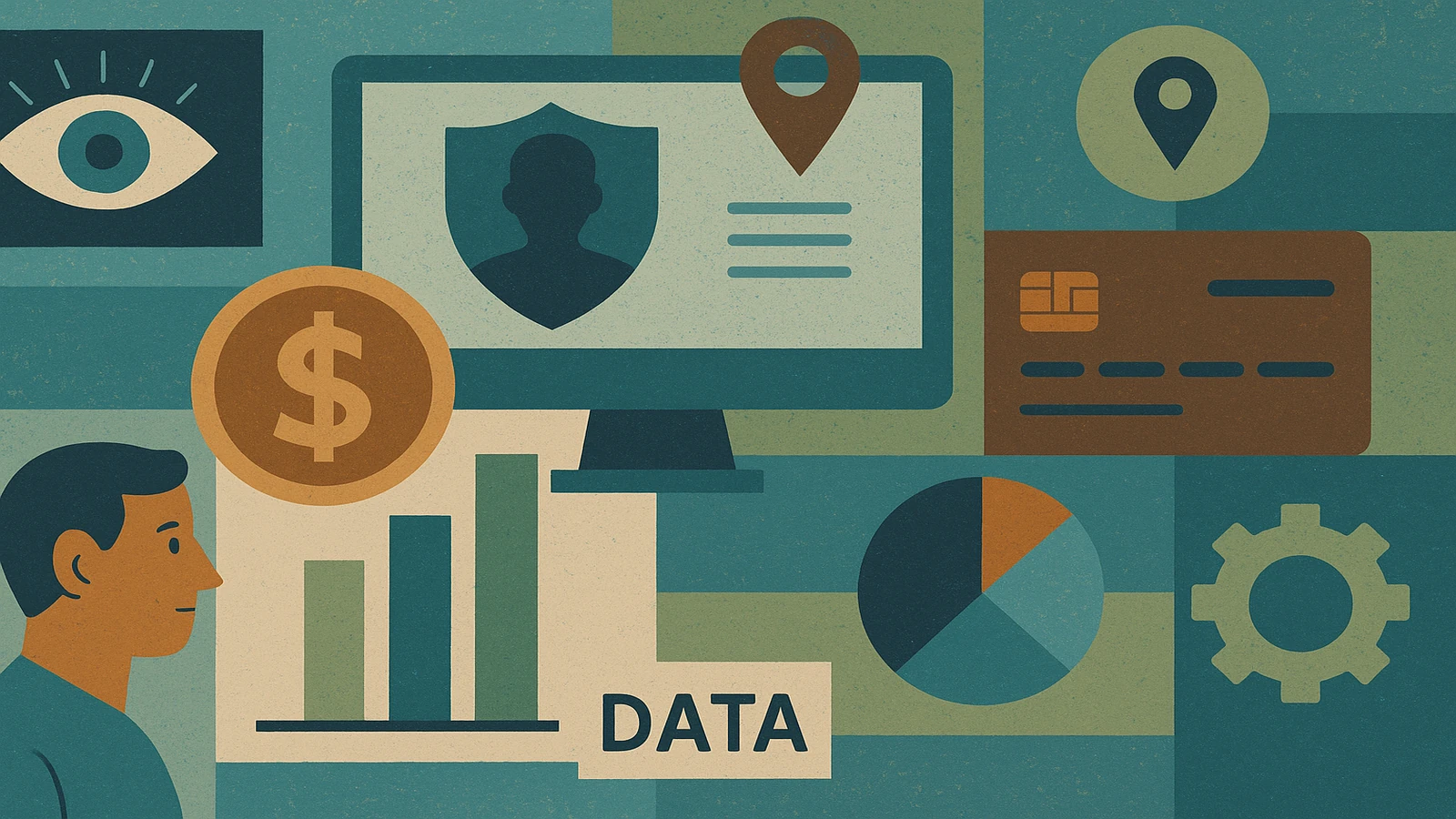
Prices have always changed. Demand rises, inventory falls, and businesses adjust. But how surveillance pricing works raises a different concern: the price may reflect not only the product or service, but what a company believes about you.
The KQED article, Surveillance Pricing Is Making Life More Expensive. Here’s How It Works and What You Can Do | KQED ↗, published June 23, 2026, makes an important privacy issue feel like a personal-finance issue. My reaction is that the warning is valuable, but readers also need a realistic way to distinguish genuine personalization from ordinary price changes and decide which privacy tradeoffs are worth making.
Key Takeaways
- Surveillance pricing uses personal, financial, behavioral, or location data to estimate what an individual may be willing to pay.
- It differs from ordinary dynamic pricing because the price can be influenced by information about the individual shopper, not simply supply, demand, timing, or inventory.
- Comparison shopping within the same retailer, along with privacy-protective browsing, may help consumers spot or limit personalized pricing, but neither can prove why a particular price changed.
- Ultimately, consumers cannot reasonably be expected to outsmart opaque pricing algorithms. Greater transparency and consumer protections may be necessary.
How Surveillance Pricing Works
Surveillance pricing takes dynamic pricing a step further by combining it with the enormous amount of information companies can collect about individual consumers. That information can include browsing history, cookies, loyalty activity, location, purchase history, clicks, mouse movements, items left in a shopping cart, financial information, and data purchased from third parties. A company can potentially use that profile to estimate how much a particular customer is willing to pay.
That is different from ordinary dynamic pricing. If an airline raises a fare for everyone because seats are filling up, that is dynamic pricing. If the price shown to you is influenced by information about you, such as your location, past behavior, or inferred willingness to pay, that crosses into surveillance pricing.
KQED provides a particularly useful documented example. A 2012 Wall Street Journal analysis found that Staples varied online prices based on a shopper’s ZIP code. Customers who lived farther from a competing store were more likely to see higher prices. In practical terms, two people shopping for the same product could receive different prices because the retailer knew that one of them had fewer convenient alternatives.
The JetBlue episode is more ambiguous, but also more troubling than a simple company denial might suggest. According to KQED, a customer complained on X that a JetBlue fare had jumped $200 overnight. JetBlue’s official account responded by suggesting that the customer clear their cache and cookies or try booking in an incognito window. The post was later deleted, and JetBlue said the response was mistaken and denied using personal information to set fares. But the suggestion itself raised an obvious question: if cookies and browsing history had nothing to do with the fare, why would clearing them or using an incognito window potentially help? JetBlue now faces a class action lawsuit alleging surveillance pricing, although the allegation has not been proven.
Why Surveillance Pricing Matters to Your Wallet
The financial concern goes beyond whether a company knows what you buy. Businesses have long used customer data to decide what products to advertise or which promotions to send. Surveillance pricing creates a more consequential possibility: that the same data could help determine how much a company thinks you are willing to pay. If that happens, personal data stops being merely a marketing tool and becomes part of the pricing process itself.
That changes the traditional idea of comparison shopping. When two people can potentially receive different prices from the same seller for the same product, there may no longer be one readily observable market price to compare. A consumer who appears less price-sensitive, has fewer nearby alternatives, needs something urgently, or otherwise looks willing to pay more could potentially be offered a less favorable price. The consumer may never know that someone else was offered something better.
The Problem: You May Never Know Why
The biggest practical problem is figuring out whether surveillance pricing actually caused a price difference. A fare that rises overnight might reflect your browsing history, but it might just as easily reflect changing inventory or demand. A different retail price could result from location, membership status, a promotion, taxes, fees, or even an error. Consumers can detect a difference much more easily than they can determine what caused it.
That uncertainty also limits what privacy measures can accomplish. A privacy-focused browser or incognito window may reduce some tracking, but it cannot erase information a retailer already has through your account, loyalty history, previous purchases, payment relationships, or data acquired elsewhere. Private browsing may therefore be a useful comparison-shopping tactic, but it should not be confused with anonymity.
Loyalty programs illustrate another complication. They can provide real discounts while simultaneously giving a company a detailed record of what you buy, how often you buy it, and which promotions influence your behavior. KQED cites a Washington Post columnist who found that the more coffee he purchased through Starbucks’ loyalty program, the fewer discounts he received. That does not prove every loyalty program works against its best customers, but it illustrates the tradeoff: the discount you receive today may come in exchange for information that helps a company understand your behavior tomorrow.
What Can You Do About Surveillance Pricing?
For a meaningful purchase, do not assume the first price you see is simply “the price.” KQED suggests comparison shopping within the same retailer by checking its app, website, and physical store. You can also ask someone else to check the same item through a different account. A different price does not prove surveillance pricing, but it tells you that shopping around may be worthwhile. Readers looking for more online deal-checking habits can also review How to Score the Lowest Prices on Amazon Every Time.
It also makes sense to treat personal data as something of value rather than something you automatically surrender. Use stronger privacy protections where practical, and think twice before connecting financial, social, email, and shopping accounts merely for convenience. California readers can explore How To Use California’s Delete Act To Protect Your Wallet for a more concrete way to reduce information held by data brokers.
But there is a limit to what individual consumers can reasonably do. KQED notes that surveillance pricing is generally legal today, although California is investigating the practice and considering legislation that could ban it. New York has taken a different approach by requiring disclosure when an algorithm uses personal data to set a price. Those policy efforts get at the fundamental problem: consumers should not have to become digital detectives every time they buy something.
The Price You See May Be Personal
Surveillance pricing changes the meaning of comparison shopping. You may no longer be comparing only one seller with another; you may also need to compare the price being offered to you with the price being offered to someone else. That is a troubling shift because the consumer usually cannot see the data or assumptions behind the price. Until the rules become clearer, the best defense is to compare prices, limit unnecessary data sharing, and remember that the number on your screen may not necessarily be the number everyone else sees.